Why Australian Government Agencies Are Rethinking Software Subscriptions
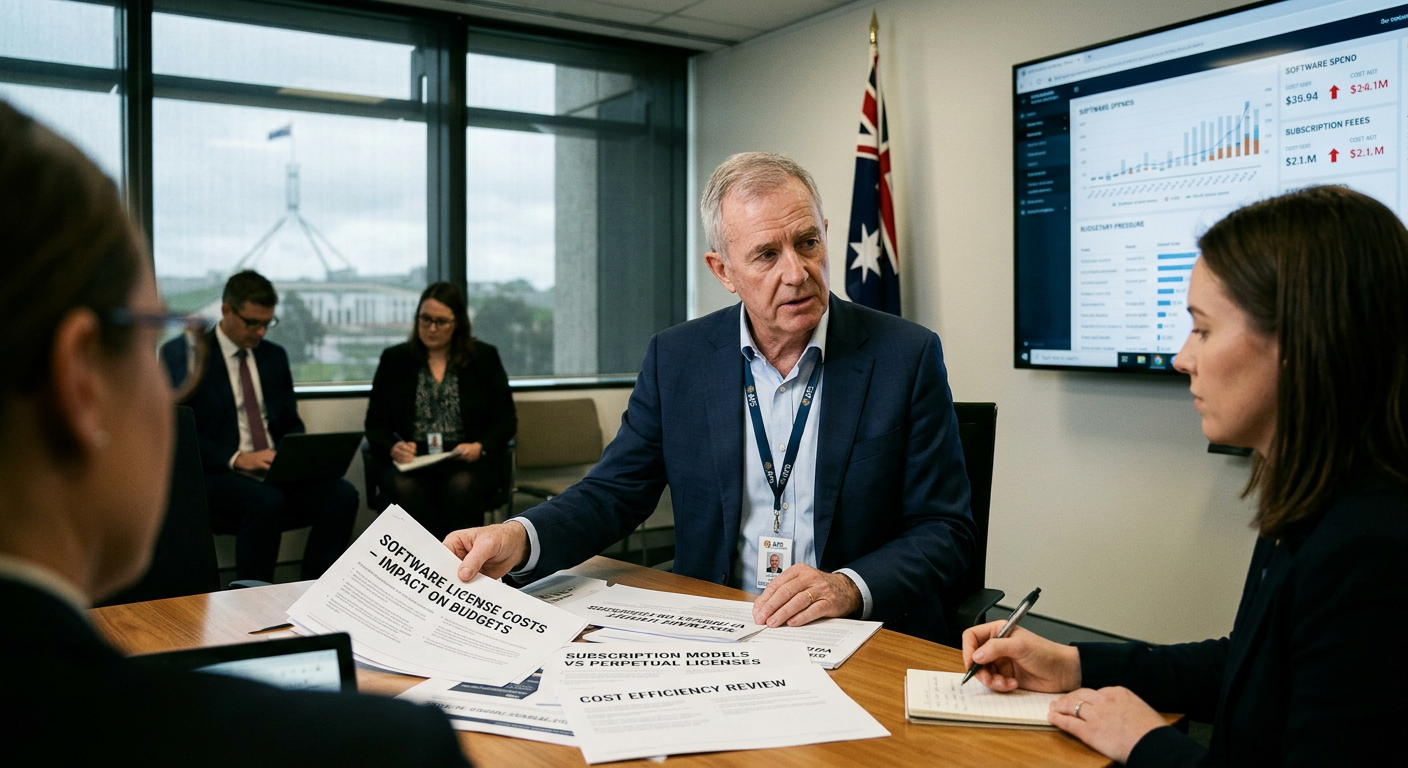
Australian government agencies have spent the better part of a decade moving toward subscription-based software. The logic made sense at the time - lower upfront costs, automatic updates, predictable monthly billing. But as those subscriptions compound year after year, a growing number of procurement teams are doing the maths and arriving at an uncomfortable conclusion: the ongoing cost has quietly become the problem.
What changed
The subscription model worked well when vendors competed on price and genuinely delivered value at renewal. That dynamic has shifted. Across the enterprise software industry, vendors have used subscription lock-in as an opportunity to raise prices aggressively. VMware, acquired by Broadcom in 2024, is a widely cited example - multiple industry sources have reported price increases ranging from significant to extreme as perpetual licensing was eliminated and replaced with mandatory subscription bundles. The specifics vary by configuration and contract, but the direction of travel is consistent: costs went up substantially for many existing customers.
Adobe followed a similar path years earlier, moving its entire product range to subscription-only and steadily increasing prices at renewal. For government agencies managing document-heavy workflows across large teams, those annual renewals now represent a significant and growing line item in the IT budget.
The pattern is consistent enough that it has a name: subscription fatigue. Managing multiple recurring software costs - each increasing at renewal, each outside your direct control - has become a recognised challenge for IT and finance teams in both government and enterprise environments.
The perpetual licence alternative
Perpetual licensing does not eliminate software costs. It restructures them in a way that suits government procurement better in many situations. You pay once, you own the licence, and your budget exposure is contained. Upgrades are available but optional - you choose when and whether to invest in a newer version based on operational need rather than vendor pressure.
For document management software specifically, the case is straightforward. PDF workflows in government environments tend to be stable. The core requirements - creating, editing, redacting, signing, and converting documents - do not change dramatically from year to year. That stability makes perpetual licensing a practical fit.
Tungsten Power PDF Advanced is A$261 per user as a one-time purchase (verified March 2026). Adobe Acrobat Pro for teams is listed at A$419.89 per user per year on adobe.com/au (verified March 2026). For a team of 10 users over three years, that is A$2,610 versus A$12,597.
Pricing accurate at time of publication. Software vendors may change pricing without notice. Verify current pricing directly with the vendor before making purchasing decisions.
That gap is hard to ignore when Commonwealth Procurement Rules require demonstrable value for money on every purchase.
For a broader look at how government teams are evaluating their PDF software options, see our earlier analysis: why government teams are switching from Adobe Acrobat to Tungsten Power PDF.
The broader efficiency picture
Software cost reduction is one part of a wider conversation happening in Australian government about operational efficiency. The same procurement thinking that is driving a reappraisal of PDF subscription costs is also prompting agencies to look at where time is being lost to manual administrative processes.
Documentation and transcription are two areas where the productivity gains from modern AI tools are measurable and immediate. Agencies already exploring ways to reduce administrative burden are increasingly looking at AI speech recognition for education and government teams as a practical complement to document workflow improvements - reducing the time staff spend on manual data entry, meeting notes, and correspondence drafting.
The tools have matured significantly. The conversation has moved from “does this work?” to “how do we deploy it at scale?”
What to consider before switching
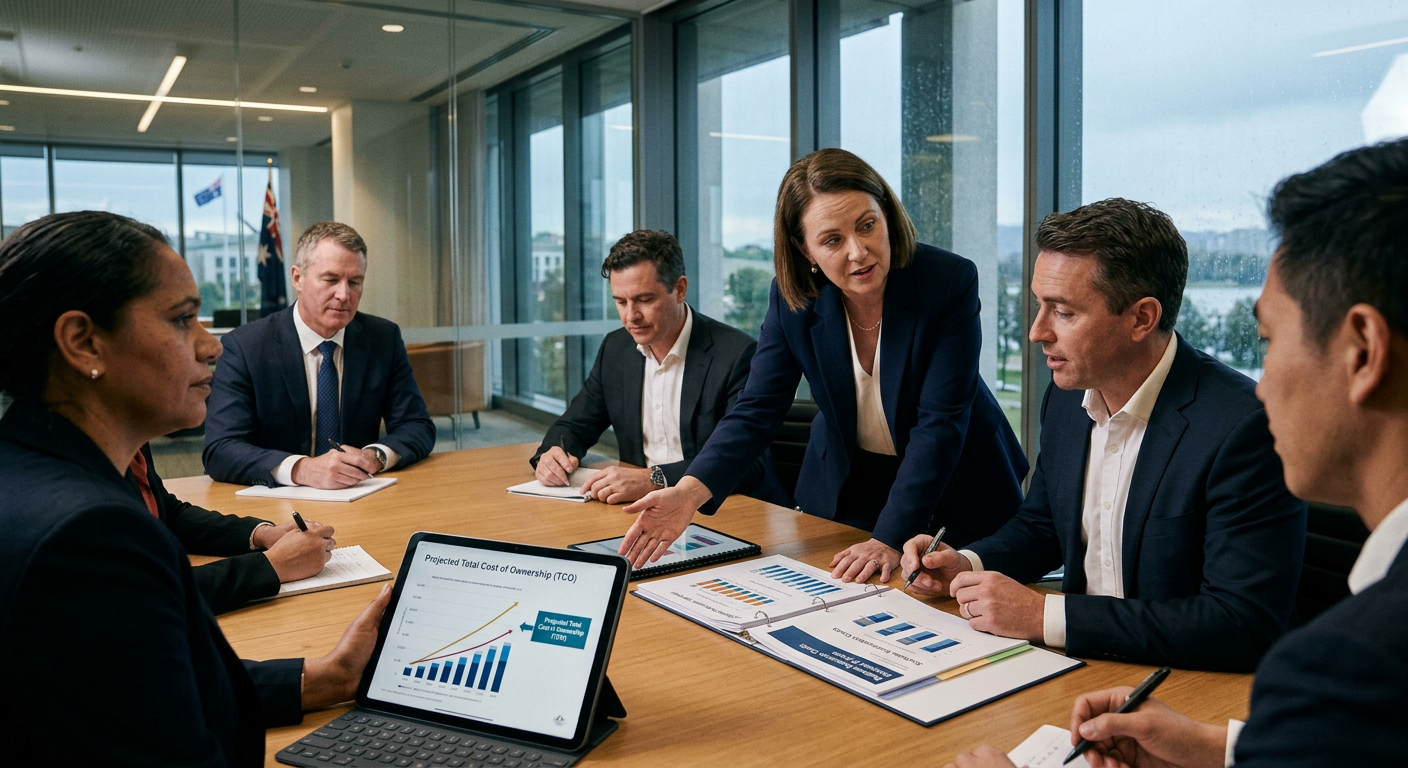
Perpetual licensing is not the right answer for every situation. Organisations with highly variable user counts, or those requiring continuous access to the latest feature releases, may find subscription models more practical. The important thing is to make the decision based on total cost of ownership over a realistic time horizon - typically three years minimum - rather than the upfront price alone.
For most government teams running stable document workflows with a consistent headcount, the maths tends to favour perpetual licensing once you model it properly.
If your agency is approaching an Adobe Acrobat renewal, it is worth comparing the three-year cost before committing. See our pricing comparison for a detailed breakdown.
FAQ
Does perpetual licensing mean no ongoing costs? Not entirely. Most vendors offer optional annual maintenance or support plans on top of the base licence. These are worth considering for teams that want access to updates, but they remain optional - you choose whether to renew rather than being locked in.
What happens if we need to add users later? Perpetual licences are purchased per user, so adding users means additional one-time purchases. For teams with stable headcounts this is straightforward. For rapidly growing teams, subscription models may offer more flexibility.
Is perpetual software still supported? Yes, for most mainstream products. Tungsten Power PDF has been in market for over 40 years and continues to receive active development. The key is to check the vendor’s support lifecycle before purchasing.
Do Commonwealth Procurement Rules favour one model over the other? The CPRs require value for money rather than mandating a specific licensing model. A well-documented total cost of ownership comparison is the appropriate basis for the procurement decision.
Ready to see PDF Software Australia in your organisation? Get a free trial and tailored proposal.
Request Information